SKU PROJ-007 · Release 2025 to today
Yeita treated as a client, on the operations side. First, upskill the team on AI, then put products in its hands: an art direction assistant and an online design system, with a tool that made marketing self-sufficient.
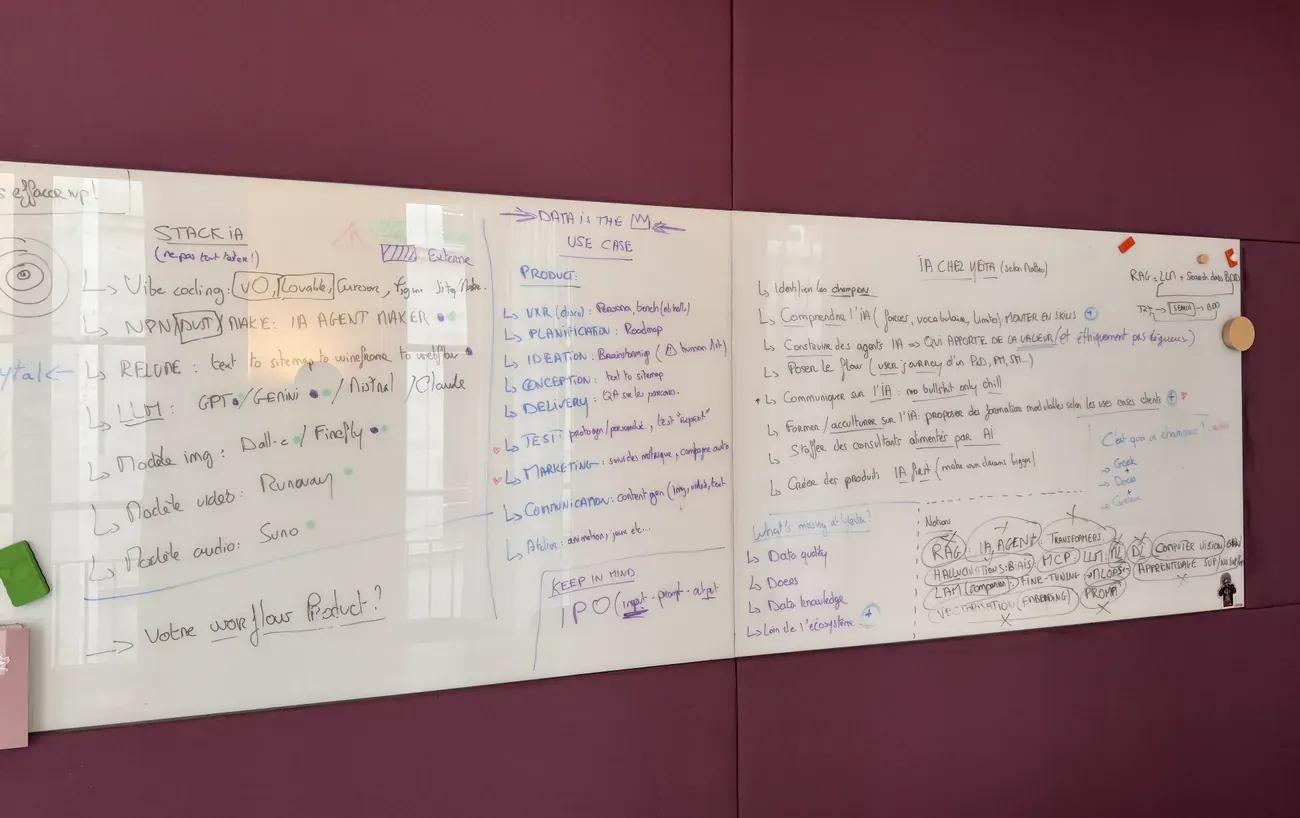
AI usually arrives through the tool: you buy a licence, then look for what it's for. The result: lots of tests, little usage, and a team split between those who experiment alone and those who don't dare to touch it. On the design side, the same bottleneck: the brand lived in Figma, and every visual or art direction question went back through the designers.
Four rules, written from day one. We start from a use case and a user, never from a tool. We stay light: no-code and integrations, no project that needs a dev team. No project without an impact indicator set upfront. And AI suggests, humans decide. Four rituals keep the circle alive: 1:1 coaching on a real business problem, live build sessions, a weekly watch with one thing to test, and a squad with two hours to fix one Yeita pain point.
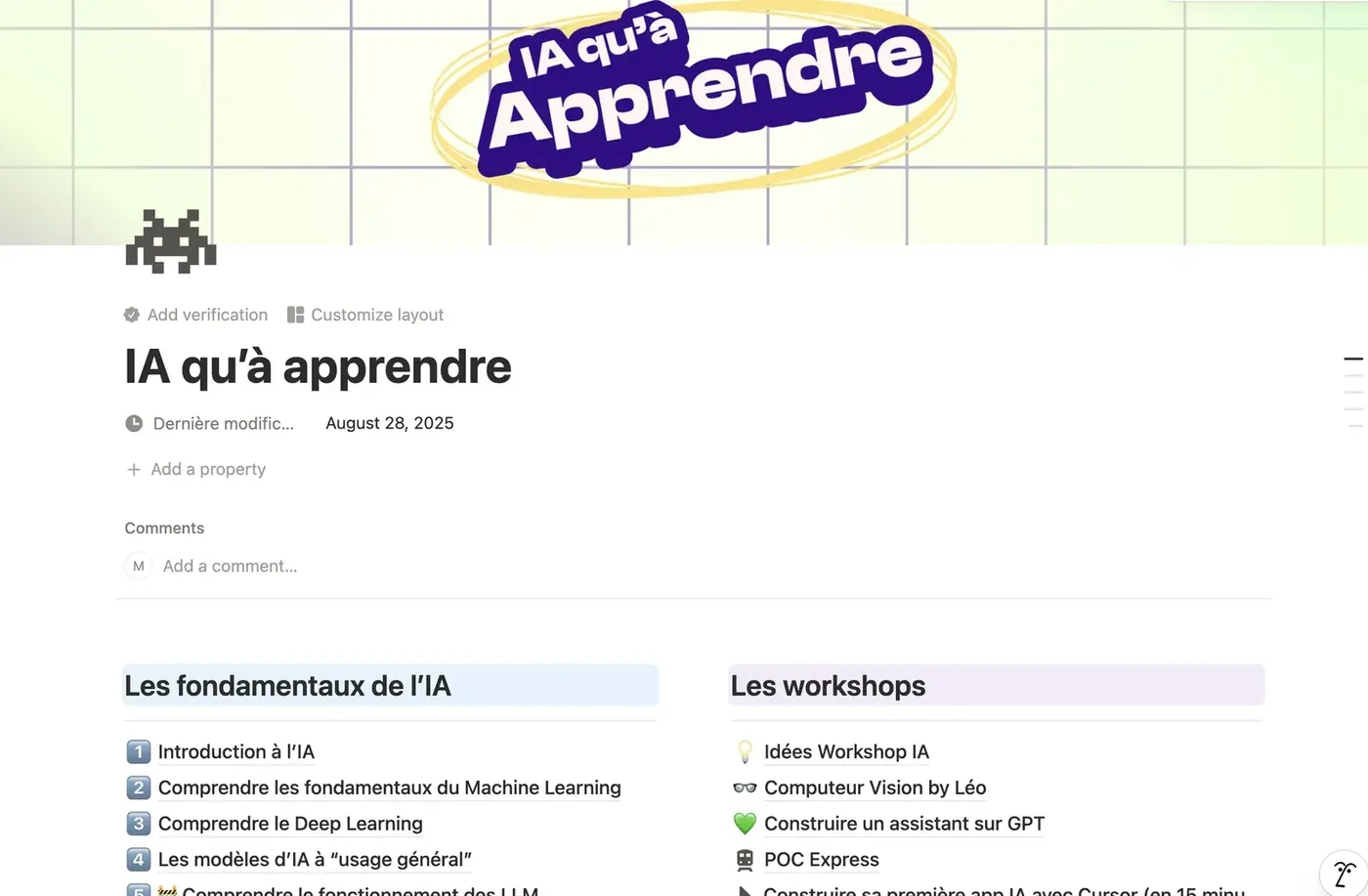
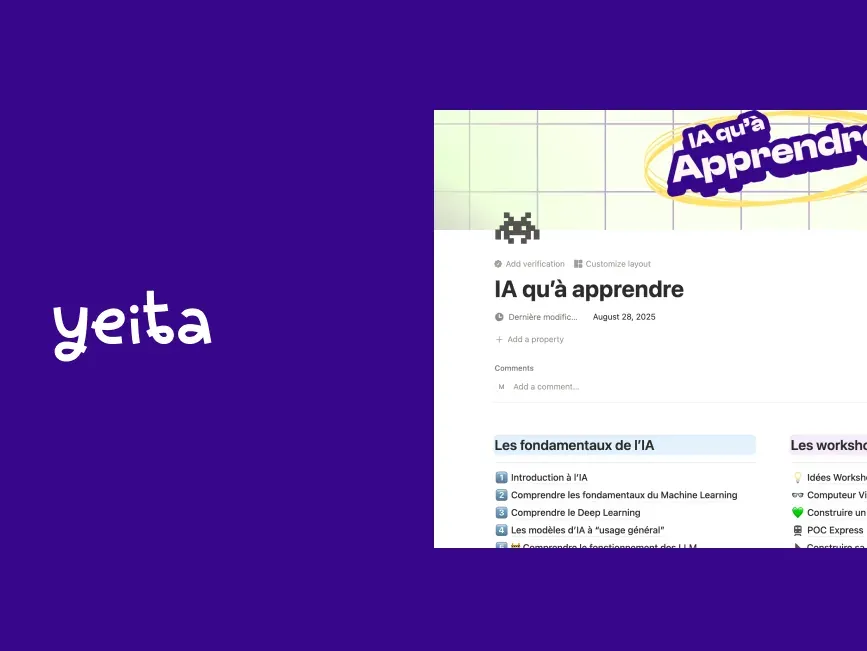
One tool per need, none of them talking to each other: that was the debt we were building. Everything the circle learns now lives in a single Notion base, "IA qu'à apprendre": fundamentals, tutorials on real cases, workshops. Claude plugs into it: a person or an agent finds the same answer in the same place.
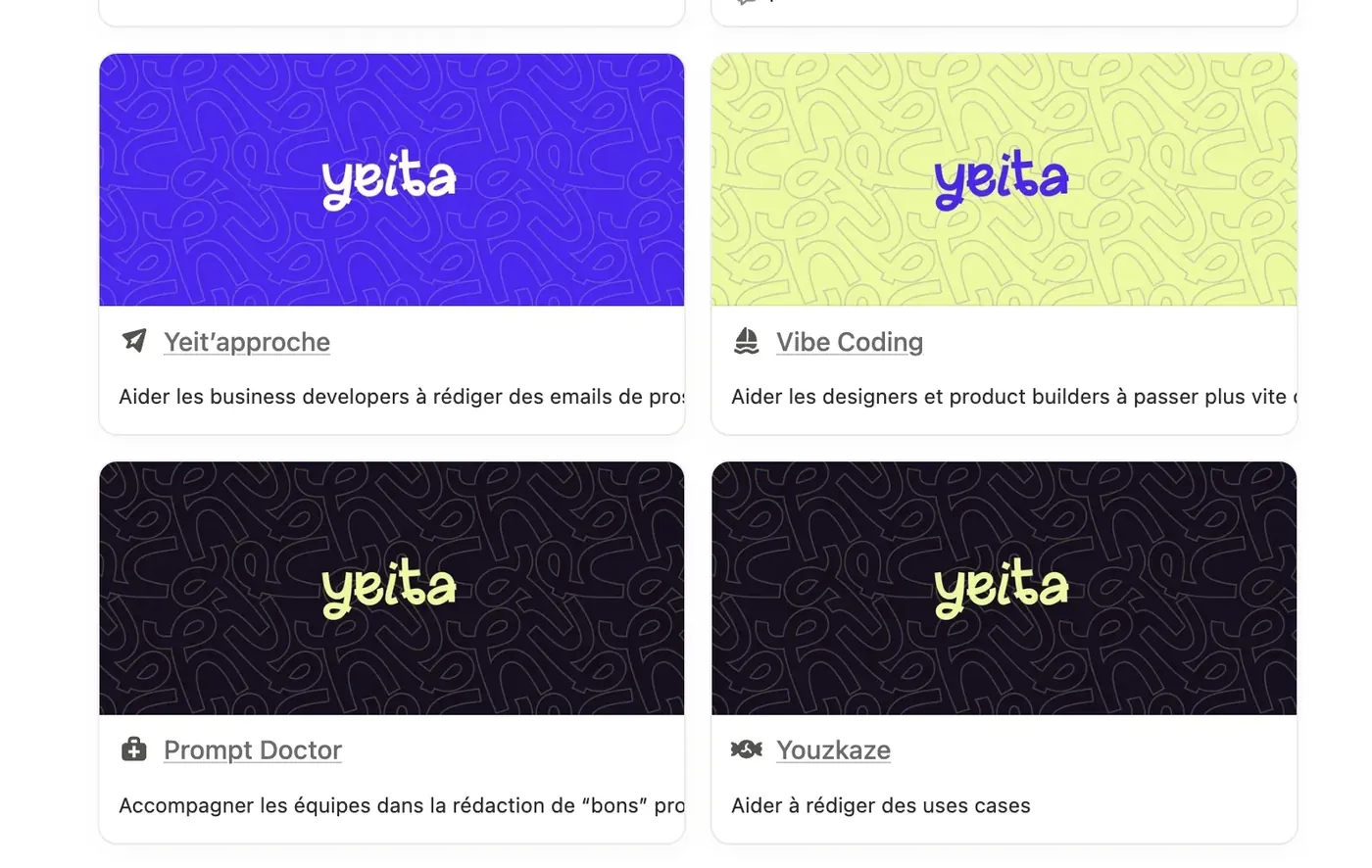
We launched seven internal assistants. Prompt Docteur passed 100 conversations, Vibe Coding 30. Most of them evolved or merged, others were killed. Dust too: no internal licence, no usage, we cut it. What holds is an agent harness that starts from a UX repository (personas, insights, journeys) and proposes mockups in Figma. It was used in a client demo and runs in our internal demo tool. Not yet in production on a project: that's the next step.
Design questions come in faster than designers can answer them. The assistant answers, audits, creates and edits screens from a base of about 200 brand rules, without ever inventing, and every output is traced for a designer's review. It is built white label: switching brands means switching rule bases.
The design system taken out of Figma and published as code: 40 documentation pages, 1,513 icons, eight rules for newcomers. With Y.Cover, marketing produces its own visuals (podcast, LinkedIn lives), on brand, and some Figma licences could be cancelled.
Around fifteen people coached, seven assistants tested and a stack narrowed down to what's used. On the product side, marketing produces its visuals on its own with Y.Cover, and some Figma licences could be cancelled; the Brand Assistant is demo-ready, white label. Not measured yet: the share of the team using AI every week. What didn't work: Relume led nowhere, Dust found no usage, some workshops drew few people.