Skip to content
SKU PROJ-008 · Release 2026 · Working version
How I
build
FRIDA Method Design system
FRIDA is my method for going from a pain point to a product people really use. Five steps, one question at each, and one rule to finish: Kill or Keep. AI produces fast, I keep the judgment.
5
steps, one question at each: that's FRIDA
25
components in Matteo DS, in light and dark
1
rule to finish: Kill or Keep
Spec sheet
- Role
- Author, and first user.
- Status
- Working version, updated with every build.
- Sources
- My fieldwork at Yeita, the double diamond, Thiga's F.O.C.U.S.E.D.
- Tools
- Claude Code, Notion, Figma, shadcn/ui, Geist.
- Tracked indicators
- For every product: is it used, and has the pain gone down?
- For whom
- Product teams who build with AI.
The observation
With AI, a prototype is out in an hour. The real problem is no longer producing: it's reviewing everything we produce, and shipping things that are useful. In the Faros AI study (2025, over 10,000 developers, a vendor study), teams merge almost twice as many pull requests and spend 91% more time in review, with no measured gain for the company. What limits a product today is the time a human has to check and decide. FRIDA is built around that limit.
FRIDA, step by step
Five steps, always in the same order. At each one: a question, a precise deliverable, and a hand from AI. The name is easy to remember, like a first name, and that's on purpose.
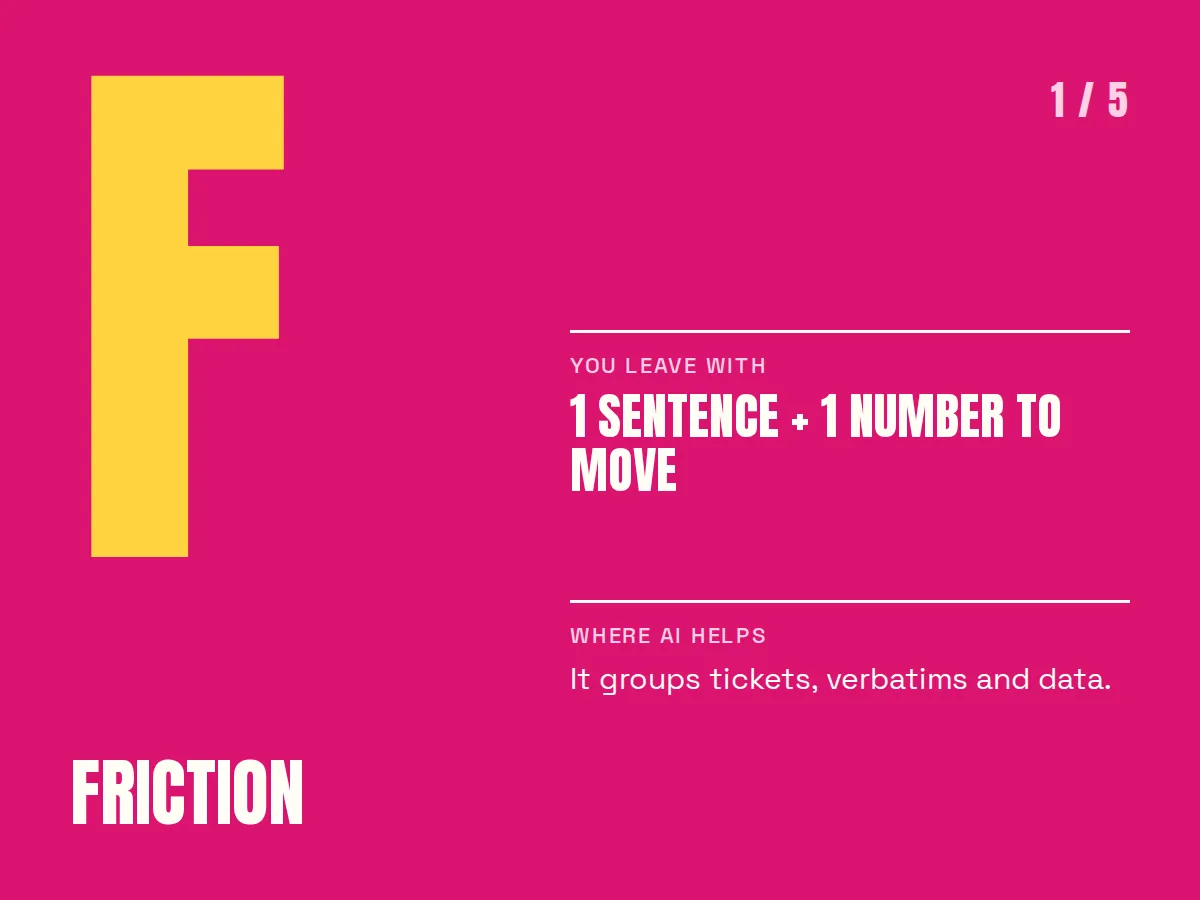
01 Friction: start from a real pain
The question: who is hurting, when, and what does it cost? At this stage, I'm not looking for a solution. I'm looking for a pain point, observed with real people. AI groups the tickets, the verbatims and the data to bring out what comes up most. I leave with one sentence and one number to move.
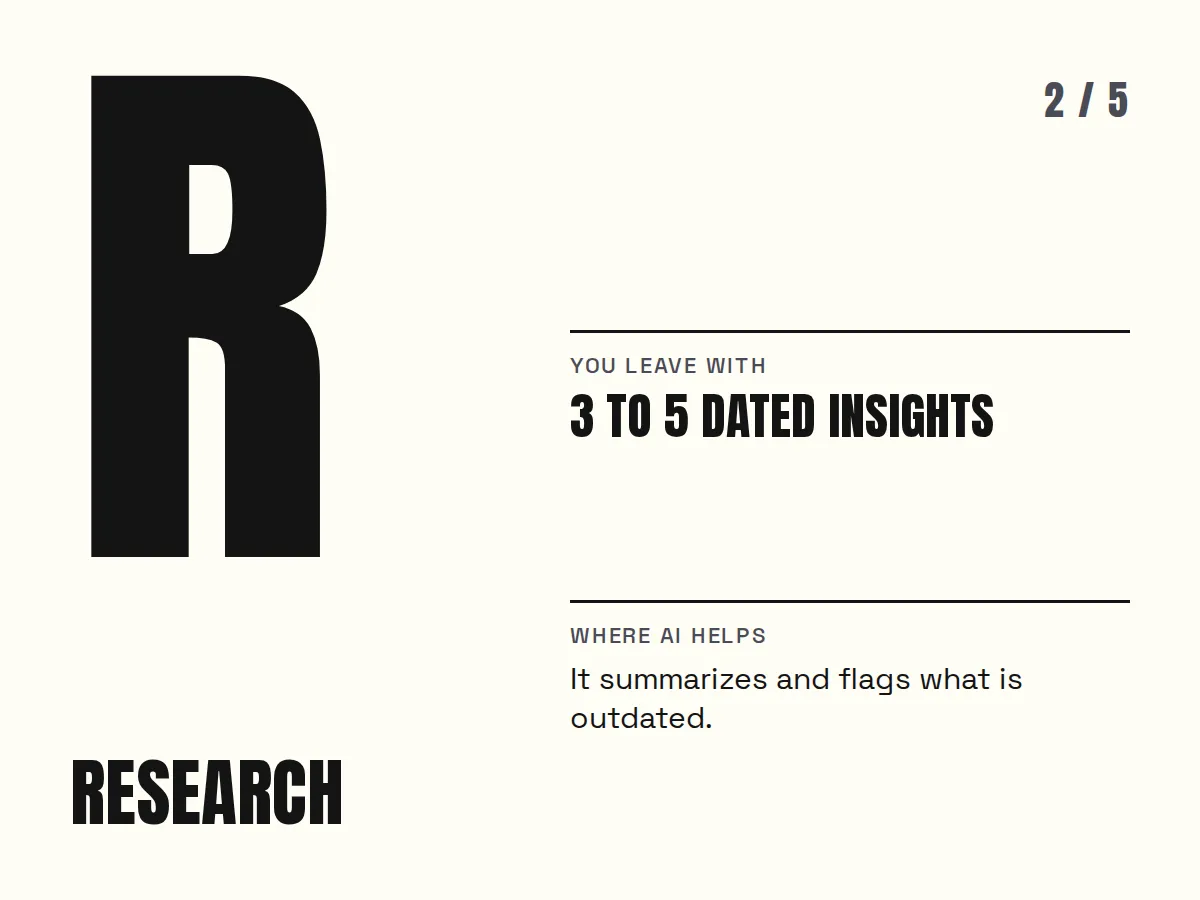
02 Research: what is true today
The question: what do we know as of today, and not a year ago? Usage changes fast, and studies age just as fast. AI summarizes what we have and flags what is outdated. I leave with 3 to 5 insights, each with its date.
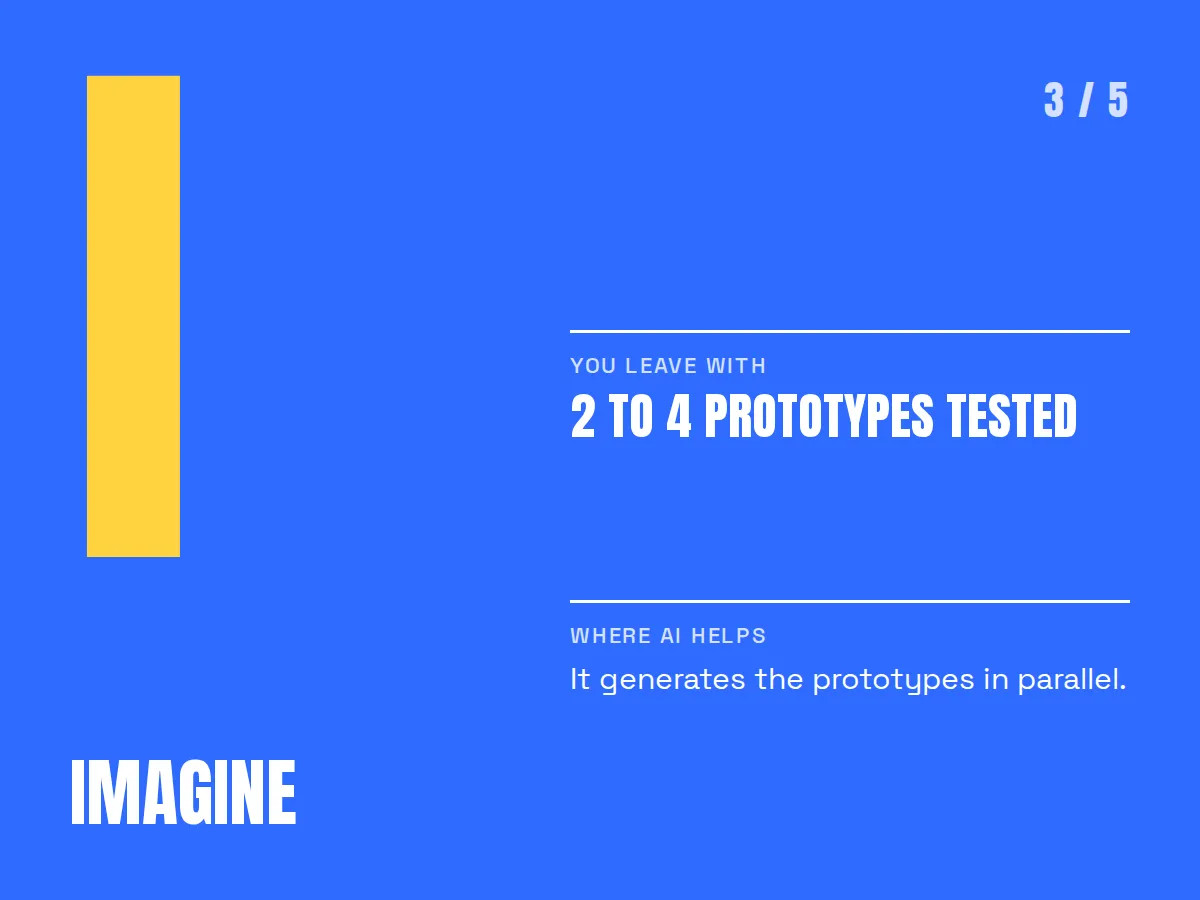
03 Imagine: several options, tested for real
The question: which solutions do we test for real? AI generates several prototypes in parallel, where we used to draw just one. I show 2 to 4 of them to users, and they are the ones who decide between them.
04 Double review: is it good, then is it correct?
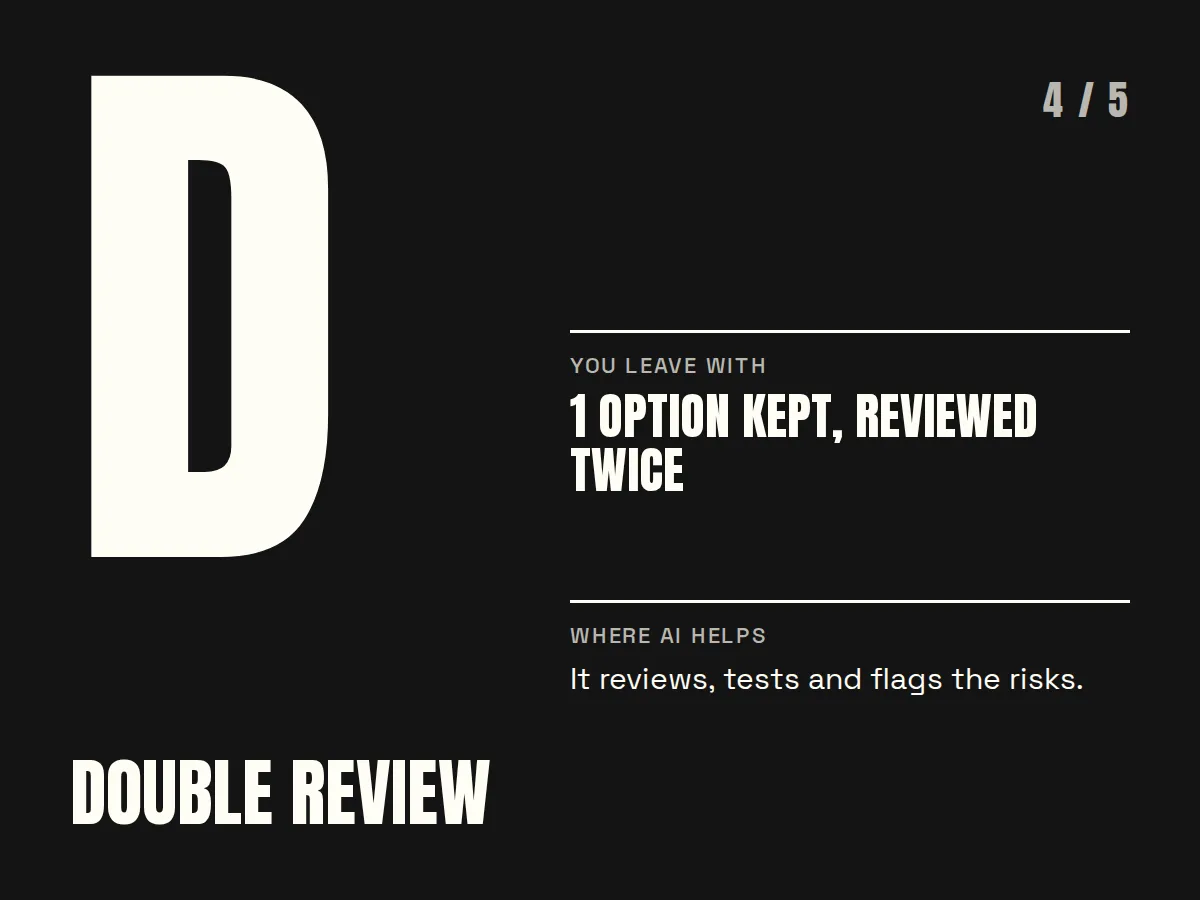
This is the step that matters most when AI produces for you. First review: is it good? Peers challenge the solution, including people from other squads. Second review: is it correct? AI reviews, tests and flags the risks, then the code is checked. I leave with a single option kept.
05 Adoption: Kill or Keep
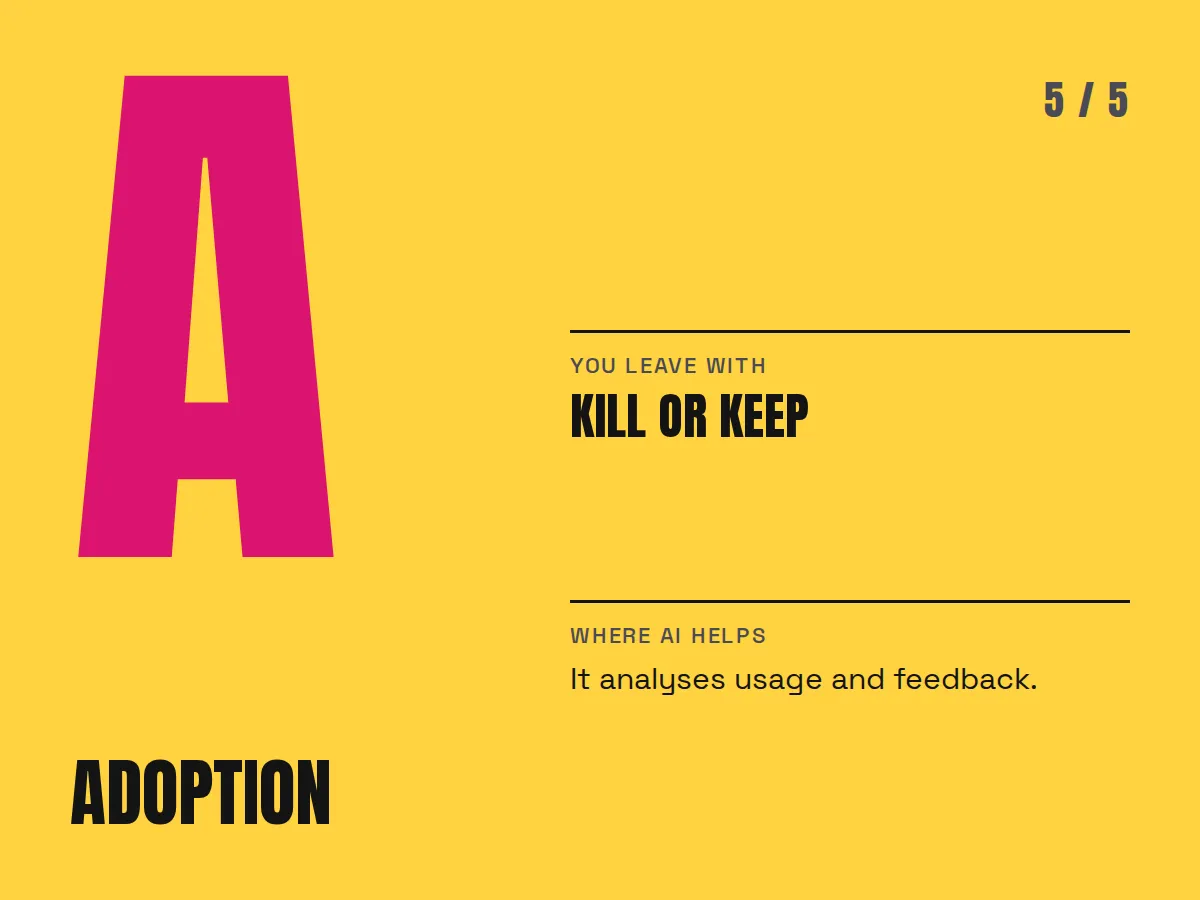
The question: is it used, and has the pain gone down? I go back to the number from step one. AI analyses usage and feedback. Then we decide: we keep what is useful, we stop the rest. A product nobody uses doesn't deserve to be maintained.
My tools for building
01 Matteo DS, my design system
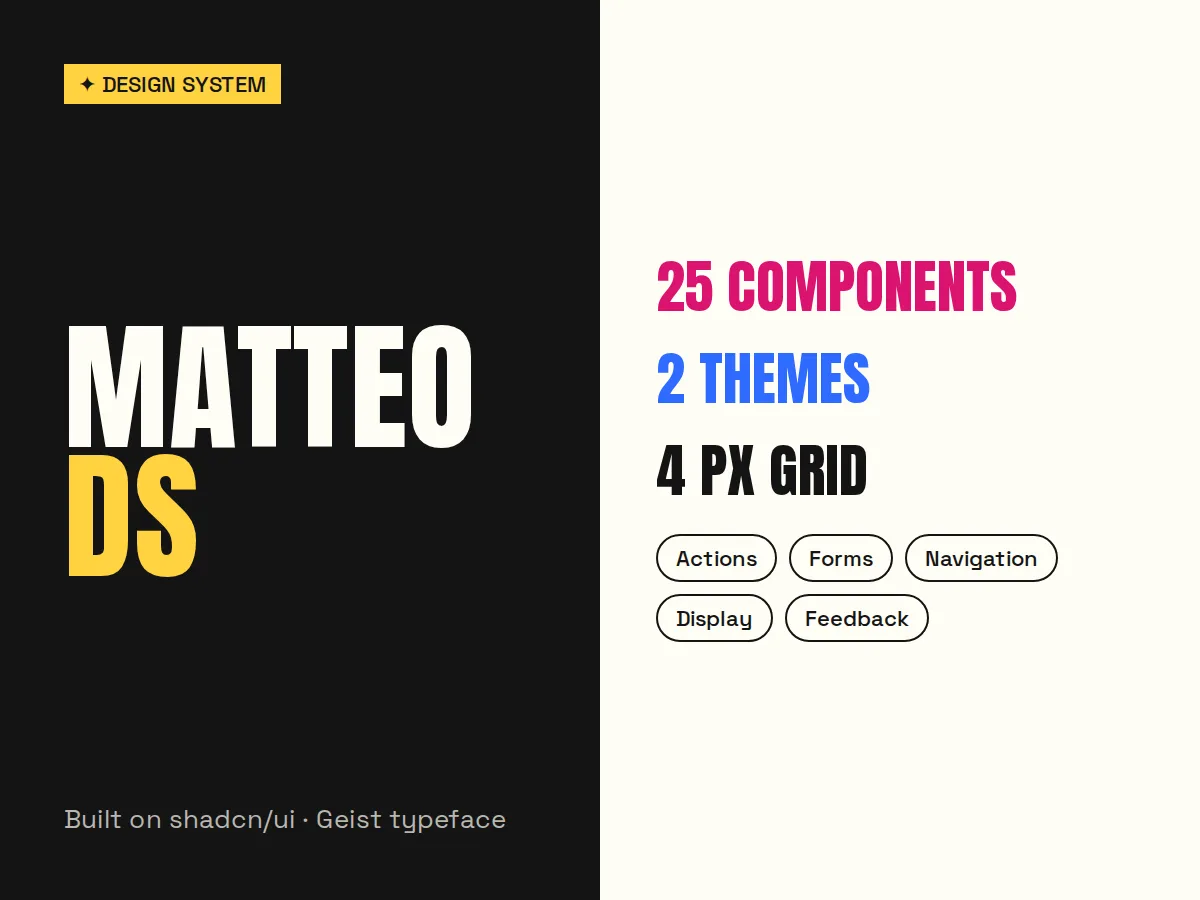
When an AI generates screens, products end up all looking the same. So I built my own design system: 25 components, two themes, a 4 px grid, on a shadcn/ui base with the Geist typeface, and full documentation. The AI assembles my components instead of inventing its own.
02 Data at the centre
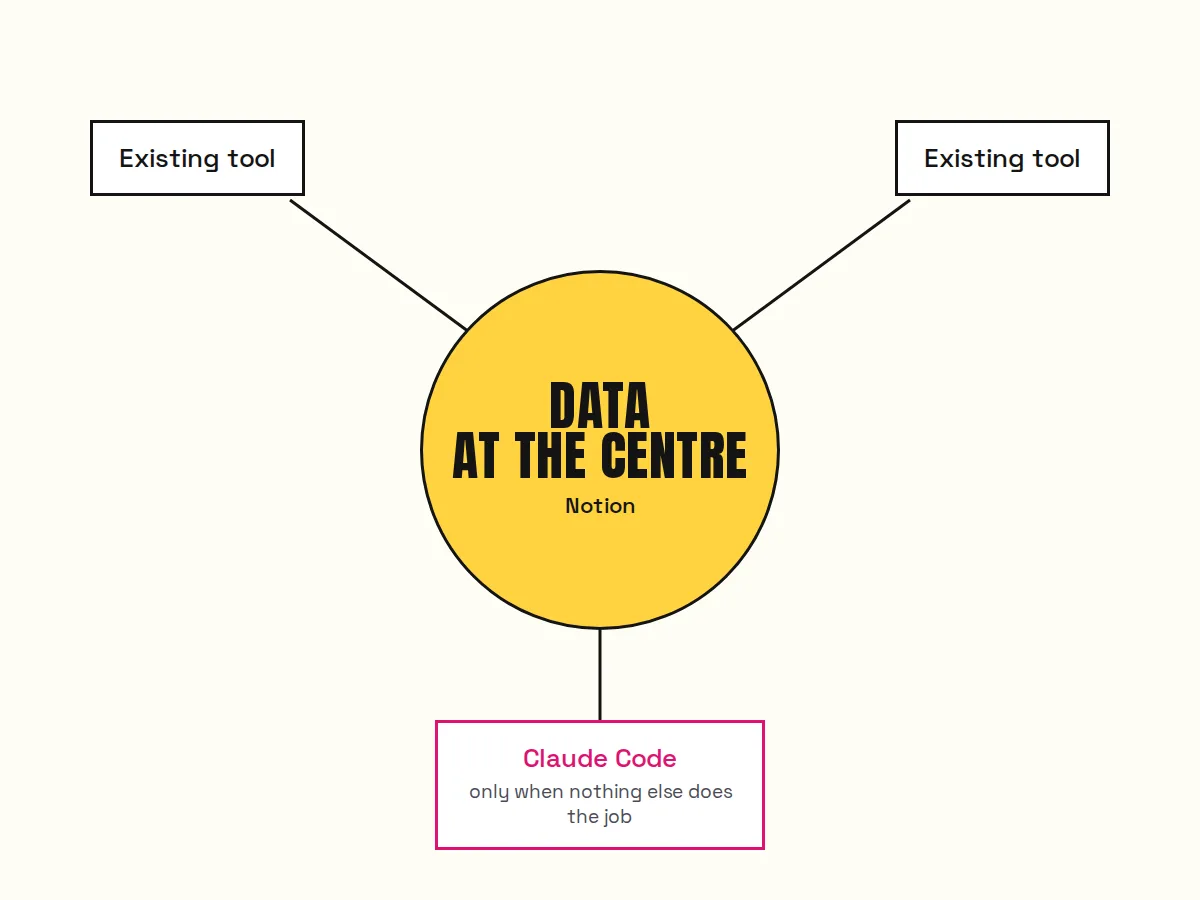
I centralize the data in Notion and plug the tools onto it. Before, I made a small tool with Claude Code for every need, and none of them talked to the others. Today, Claude Code is only used when no existing tool does the job.
In progress
Three workstreams I'm running right now with Yeita's AI circle. Nothing is finished: I'm showing where things stand.
Agent harnesses
A harness is the frame you give an AI agent so it works properly: its sources, its tools, its rules. Ours starts from a UX repository (personas, insights, journeys, backlog) and proposes mock-ups in Figma from an insight.
Where it stands: in testing on a fictional dataset.
Mini-products
Small internal products to learn by building: a gamified onboarding for newcomers, and a demonstrator where Notion is the central repository, with Claude and its connectors as the single interface.
Where it stands: being framed and built.
User and data centric
Every demonstrator follows the same thread: we start from a user insight, centralize it, design, ship, measure, and the measurement goes back into the repository. A mock-up should trace back to an insight, and a product to a number.
Where it stands: the path is defined, measuring the time saved is still to do.
Where I stand
FRIDA is a working version. It comes from my fieldwork at Yeita and from existing methods (the double diamond, Thiga's F.O.C.U.S.E.D). It hasn't yet been applied end to end on a product used by other people: that's the next step. I'll publish the results here, good and bad.